
The Art of Public Speaking
By Ms. Divya Nair
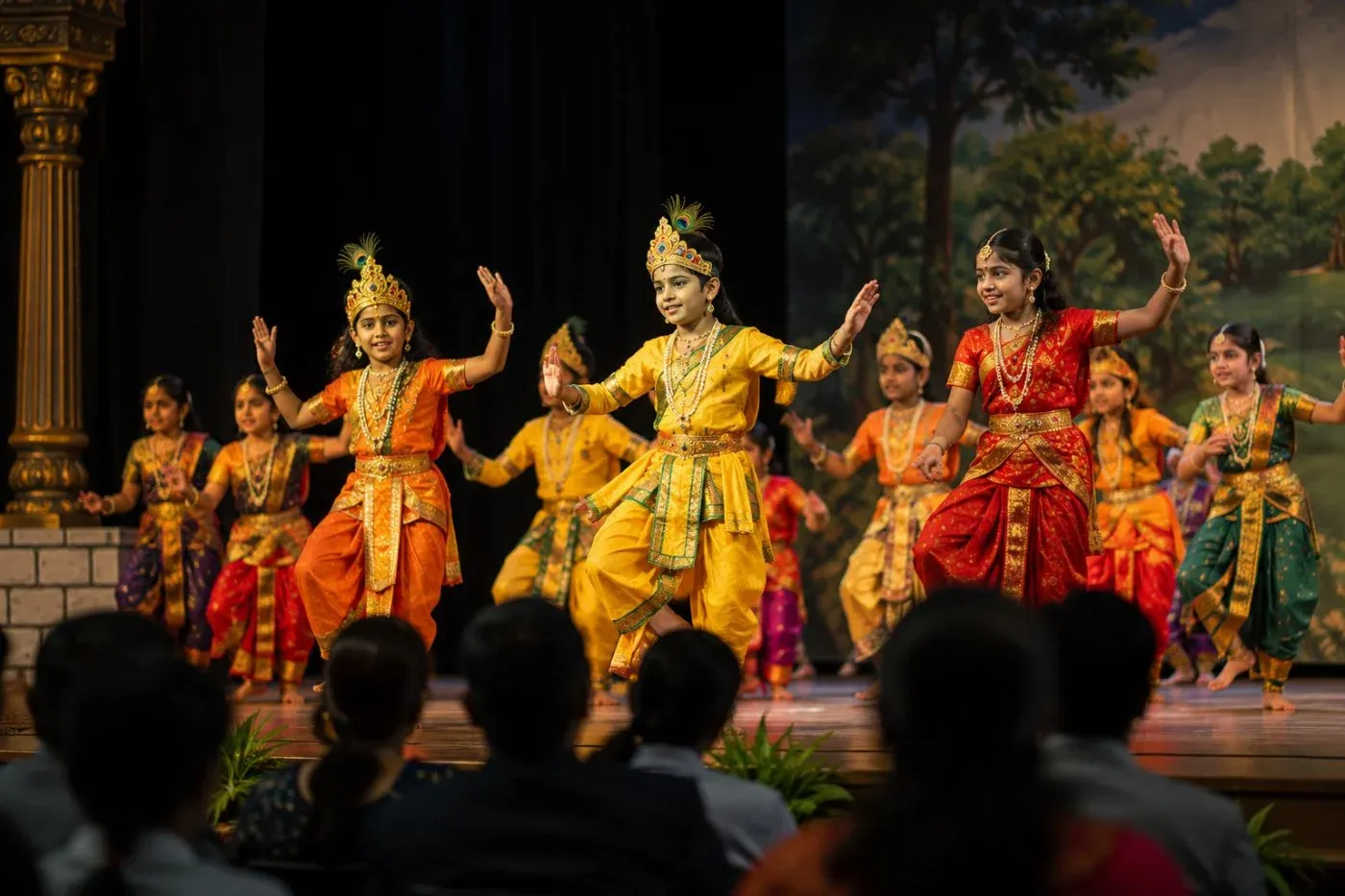
Why we start in Grade 3
Public speaking is one of the few skills that gets harder to learn the longer you wait. An eight-year-old will happily narrate a made-up story to a room of strangers; a sixteen-year-old who has never had to has usually built a genuine fear around it. We start structured speaking practice early and deliberately, well before self-consciousness has a chance to set in, precisely because the window closes.
Structure before style
We do not begin with delivery — voice, pace, gesture — because polish on top of a shapeless talk just makes the shapelessness more visible. We begin with structure: one clear point, three things that support it, one line that closes it. A student who can build that scaffold has something worth saying, and once there is something worth saying, the nerves about saying it tend to matter less.
Handling the shake in your voice
Every speaker’s voice shakes the first several times, and the honest advice is not to make it stop but to keep going while it does. We tell students plainly that the audience is far less aware of a shaking voice than the speaker feels it is, and we give them small, low-stakes stages — a class of twenty before an assembly of two hundred — so the first shake happens somewhere it costs nothing.
How parents can rehearse without taking over
The most useful thing a parent can do at home is listen to the full speech once without interrupting, then ask only one question afterwards: "what part were you proudest of?" It keeps the ownership of the speech with the child, which is exactly where the confidence needs to sit.
More from the GSSE blog
New Age Learning
The current state of knowledge is a moment in history — and a classroom that treats it as final has already fallen behind.

The Journey of Education
Online classes were the most argued-about experiment in Indian education. Four years on, here is what actually stayed.

Education in the Time of Covid-19: A View into the Inequities of Learning
Access to quality education in India was never evenly distributed. A shared crisis made the gap impossible to look away from.